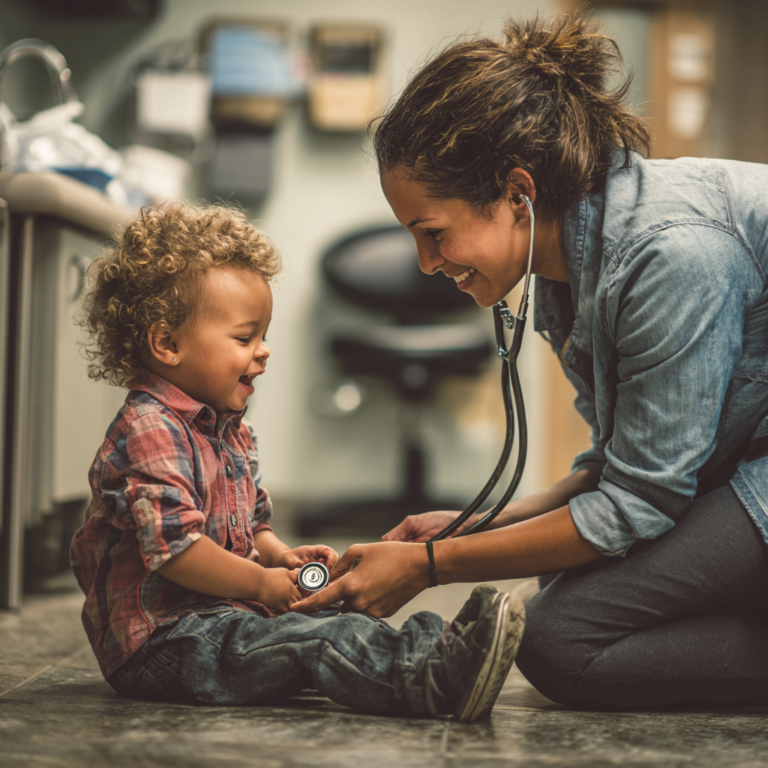

The Shield We Owe Our Children: Immunization, Disease Prevention, and the Role of School Pediatricians
There is an old and quiet truth about disease, one that whispers through the corridors of history, carried by the stories of smallpox, polio, and influenza. It is the truth that illness is not merely an accident of fate, nor a punishment doled out at random. It is the truth that disease, left unchecked, does not respect borders or intentions; it finds its way into the lungs of the unsuspecting, grips the hands of the unprotected, and makes its home in the spaces where preparation was an afterthought.
And yet, against this inevitable tide, we have built defenses, not walls of stone or steel, but shields woven from knowledge, medicine, and care. Immunization is one such shield, a safeguard that has turned the tides of history, making diseases that once terrorized entire generations into little more than footnotes in medical textbooks. But this shield is only as strong as our commitment to it.
In the sanctuaries of learning, in the private schools and Christian academies where faith and education intertwine, there exists a sacred duty: to protect the children entrusted to their care. And in this duty, school pediatricians stand as sentinels, ensuring that no child falls prey to an illness that could have been prevented.
Immunization: The First Line of Defense
Vaccines are not miracles, though they have achieved miraculous things. They do not operate on faith alone, but on the precise science of the body’s memory, teaching it to recognize threats before they ever arrive, training it to fight before a battle even begins. The American Academy of Pediatrics (AAP), alongside the Centers for Disease Control and Prevention (CDC) and the World Health Organization (WHO), has long affirmed that immunization is the most effective way to prevent the spread of infectious diseases.
Measles, mumps, rubella, whooping cough. These are not relics of the past. They linger in communities where the armor of vaccination is thin, where hesitancy has carved gaps in protection. And in schools, where hundreds of children breathe the same air, touch the same surfaces, and share the same spaces, even a single case can spread like wildfire.
The Role of School Pediatricians in Immunization Programs
To speak of school pediatricians is to speak of guardians, not just of physical health, but of a future where children can learn and grow without the specter of preventable disease looming over them. Their role is not simply to treat, but to prevent, educate, and advocate.
- Ensuring Compliance with Vaccination Requirements: School pediatricians work alongside administrators to ensure that students are vaccinated according to public health guidelines. They review immunization records, identify gaps in coverage, and provide resources for families to stay on schedule.
- On-Site Vaccinations: In many cases, the pediatrician can bring the care directly to the students, administering vaccines in the very spaces where children spend most of their days. For families with limited healthcare access, this can be the difference between protection and vulnerability.
- Educating the School Community: Misinformation is a disease of its own, spreading rapidly and leaving harm in its wake. School pediatricians act as educators, offering science-backed explanations to students, parents, and staff, dispelling myths, and reinforcing the importance of immunization.
Beyond Vaccines: A Holistic Approach to Disease Prevention
Vaccination is only one battle in the war against disease. There are smaller, quieter practices that, when cultivated consistently, create an environment where illness struggles to take root.
Disease Surveillance and Early Intervention
Infections do not announce themselves with grand fanfare. They start small: a cough in the back of the classroom, a fever dismissed as exhaustion, a rash that seems insignificant until it isn’t. School pediatricians play a critical role in early detection, conducting regular screenings for illnesses like influenza, strep throat, and conjunctivitis.
The Power of Hygiene Education
Good hygiene is an old wisdom passed down in kitchens and classrooms, in the gentle reminders of parents and teachers. Wash your hands. Cover your cough. Don’t share drinks. But it is one thing to tell a child to wash their hands; it is another to make it a habit ingrained in the fabric of daily life. School pediatricians ensure that hygiene education is not an afterthought but a core practice in schools, installing hand-washing stations, ensuring access to sanitizers, and making cleanliness a cultural expectation, not a suggestion.
Infection Control Measures
A school is a living, breathing organism. Every desk, every doorknob, every shared textbook is a vessel for transmission if precautions are not taken. A school pediatrician works with administrators and custodial staff to ensure that surfaces are regularly disinfected, that classrooms are well-ventilated, and that sick students and staff are given the time to recover before returning.
The Role of Parents: Partners in Protection
The work of disease prevention does not begin and end at the school’s front doors. It extends into homes, into the conversations at dinner tables, into the small choices made each morning before a child steps onto a school bus. Parents are co-architects of their child’s health, and school pediatricians work to ensure they are equipped with the tools to build wisely.
- Providing Accurate Information: Fear thrives where knowledge is absent. Pediatricians provide clear, evidence-based resources to parents, addressing concerns about vaccine safety and efficacy.
- Encouraging Vaccination Compliance: Catch-up vaccination programs, reminder calls, and school-hosted vaccine clinics ensure that no child is left behind due to scheduling conflicts or logistical barriers.
- Reinforcing Healthy Habits at Home: The lessons of hygiene must extend beyond school walls. Handwashing, cough etiquette, and proper nutrition are all part of the larger tapestry of disease prevention.
Addressing Vaccine Hesitancy: A Battle for Trust
Vaccine hesitancy is not a new phenomenon. It is a whisper passed from parent to parent, fueled by doubt, by misinformation, by a world where fear is easier to spread than facts. But hesitancy can be met with understanding, with patience, with conversation.
- Building Trust: A school pediatrician does not dismiss concerns. They engage, they listen, they respond with empathy and evidence.
- Providing Clarity: Myths must be met with truth. Pediatricians work to counteract misinformation with straightforward, accessible explanations of vaccine safety and effectiveness.
- Community Engagement: Public health is a communal effort. School pediatricians partner with faith leaders, educators, and local healthcare providers to reinforce the message: we protect each other best when we all participate.
The Final Word: A Duty, Not a Choice
To immunize a child is to honor the past, to recognize the lessons of history, to acknowledge the lives lost to diseases we now have the power to prevent. But more than that, it is to invest in the future, to ensure that classrooms remain places of learning, not places of contagion.
A school pediatrician is not just a doctor. They are a protector, an educator, a guide. And in the sacred duty of keeping children safe, their presence is not optional. It is essential.
Would you like any refinements or additional elements?
Rising Star Pediatrics offers a Medical Directorship program for private schools, covering standing orders, health handbook audits and faculty training.